
Country Stash Co.
This site sells cannabis products. You must be 21 years of age or older to enter.
This site sells cannabis products. You must be 21 years of age or older to enter.
Home / Terpenes 101: The Flavor and Effects Behind Cannabis
September 3, 2026
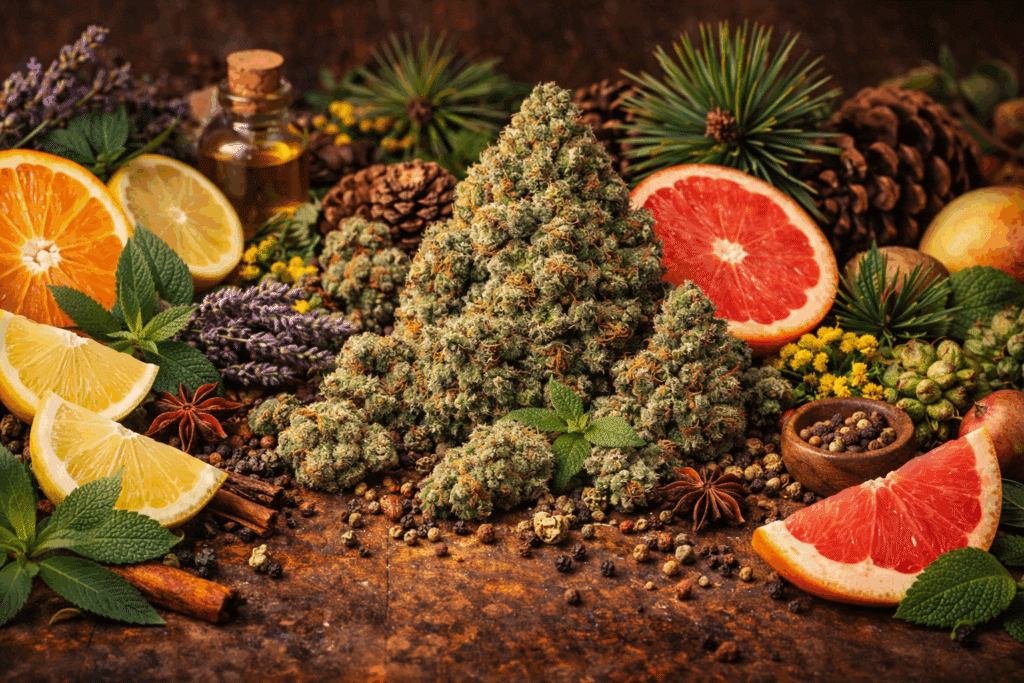
Terpenes are aromatic compounds found throughout the plant world — they're what give lavender its scent, black pepper its bite, and mangoes their smell. Cannabis produces its own diverse mix of terpenes, and the specific blend in a given strain shapes both its flavor and, many believe, how it makes you feel.
Myrcene: earthy, musky, slightly fruity. The most common terpene in cannabis, often associated with a more relaxing, sedative quality. Also found in mangoes and hops.
Limonene: bright, citrusy. Commonly associated with uplifted, elevated mood. Found in citrus peels.
Pinene : sharp, fresh pine scent. Associated with alertness. Found in pine needles and rosemary.
Linalool: floral, slightly spicy. Associated with calming effects. Also found in lavender.
Caryophyllene: peppery, spicy, woody. Notable because it's the only terpene known to also interact directly with the endocannabinoid system similarly to a cannabinoid. Found in black pepper and cloves.
Humulene: earthy, woody, subtly hoppy. Found in hops and cloves.
The idea behind the entourage effect is that terpenes don't just add flavor — they may modulate how cannabinoids like THC and CBD interact with your body, shaping the overall experience beyond what cannabinoid content alone would suggest. This is part of why two products with identical THC percentages can feel noticeably different.
A product's terpene profile is often listed on its Certificate of Analysis (COA) or on the packaging itself. If you've noticed you tend to prefer certain effects, look at the dominant terpenes in the products you've liked over time, this can become a more reliable guide than the indica/sativa/hybrid label alone.
Curious about a specific product's terpene profile? Our team can pull up lab results for anything in our catalog.
This article is for general educational purposes only and is not medical advice. It has not been evaluated by the FDA and is not intended to diagnose, treat, cure, or prevent any disease. Consult a physician before using cannabis for any health condition.
← Back to home